


Feedback from customers is a big part of how people perceive organizations before making any decisions. Although testimonials and reviews may appear to be quite similar in nature, they play their own important role in helping to gain the trust of potential customers. The knowledge of the differences between testimonial vs review will be very beneficial for businesses.
A testimonial is a customer statement about his/her experience with a particular business or its products/services that brings out all the benefits and success factors related to the product recommendation.
Testimonials are gathered by companies themselves and included in the marketing materials (websites, landing pages, advertising, and sales pitches). Testimonials typically include a customer’s story: problems, experience, and outcome.
For instance, a software development company can have a client telling the story of his better experience with a certain product. This feedback makes sense, as it adds context for future clients.
Businesses tend to use customer testimonials due to the emotional factor and success stories they present. But testimonials must be genuine.
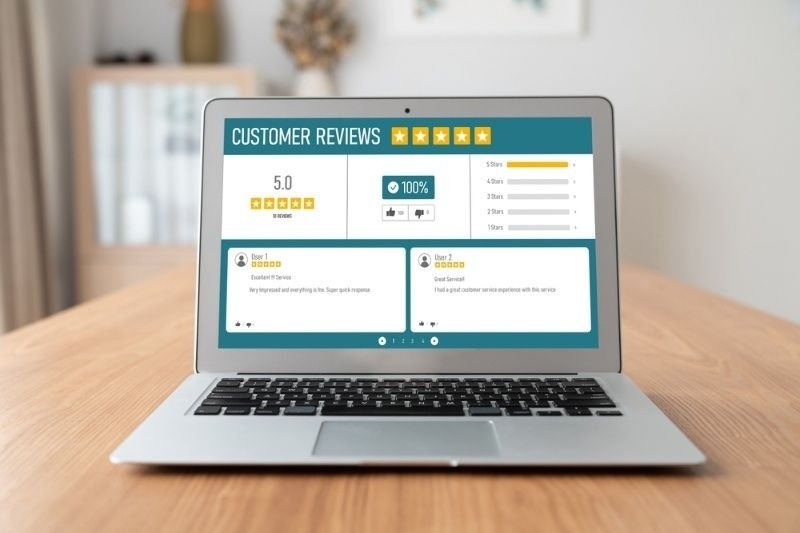
A review means the opinion of a customer about a brand or a review of a particular product, service, or business. Reviewing can take place through a third-party website or on a business website or marketplace.
Customer reviews tend to be shorter compared to testimonials. A customer review does not necessarily have to be good. A customer review could be positive, negative, or even neutral.
For instance, a customer will provide online reviews that may contain information about the quality of products, speed of delivery, or service experience. Such opinions guide future customers.
Also Check: A Practical Customer Feedback Strategy for Business Growth
Recognizing the difference between testimonials and reviews makes it easier for businesses to select an appropriate format depending on their marketing objectives.
The key distinguishing factor in the testimonial vs review debate lies in the intent.
Testimonials are intended to celebrate successes and to help promote a business. Generally, they concentrate on successful cases and reasons why people recommend a business.
A review is a more in-depth evaluation of the customer's experience. It can contain positive comments, suggestions, criticism, or personal ratings.
Testimonials are often more elaborate and story-based. Customer interviews, videos, case studies, and other forms of testimony are used.
Reviews tend to be concise and straightforward, with a rating system provided alongside a description of the customer’s experience.
Companies have the option of using either one, depending on whether they want to tell an elaborate story or highlight customer satisfaction in general.
Testimonials appear on media controlled by businesses, such as company websites, marketing campaigns, and any form of promotional material.
Reviews are seen on outside media, on which customers write about their experiences. These sites may affect buying behavior because consumers seek out unbiased reviews.
Both testimonials and reviews play an important role in building the reputation of a company.
Business reviews serve as a signal to potential customers that there are people who have already dealt with the company and have certain experiences. In addition, a number of positive business reviews can increase credibility and inspire potential customers to make a move.
Testimonials for businesses will help to understand more about the success stories of the customers. The company is able to show its achievements and the benefits of its solutions to customers.
It will be helpful for a company to learn how to use testimonials and reviews for marketing.
Testimonials may be used on:
Reviews may be used to:
Authenticity is the most important thing in this regard. Customers prefer real reviews to promotional ones.
Must Read: Why Review Replies Matter and How to Respond the Right Way?
An effective feedback method is useful for obtaining useful information from customers.
The process of collecting customer opinions can be made easy for them. Asking targeted questions will lead to receiving answers rather than vague comments. Customers can be asked for testimonials regarding their problems, solutions, and experiences.
For reviews, customers can give an honest opinion about the company’s offerings.
Using various feedback types will make it easier to learn the needs of customers as well as create marketing content.
Today’s buyers tend to do their homework on companies before making purchase decisions. What they need is proof that a company can provide quality experiences.
The pairing of testimonials and reviews provides a balanced solution. Reviews provide clarity, while testimonials provide detailed examples of success stories from customers.
It is important to note that no business should manufacture feedback and claims since genuine customer experience is vital in building credibility.
It all comes down to purpose, format, and usage of testimonials and reviews. As far as purpose goes, testimonials emphasize the importance of sharing customer experiences in detail while reviews discuss products/services' opinions.
Testimonials and reviews play an important role in developing customer feedback policies.
A testimonial is usually a long statement by a customer praising their positive experience. A review is a customer’s critique. It can be positive, negative or neutral.
Your choice depends on the purpose you want to achieve. For marketing purposes, testimonials would be a perfect choice, but reviews will be more beneficial in creating transparency.
A review is an evaluation made about the product or service, while testimonials center around a success story or recommendation of satisfied customers.
A testimonial emphasizes customer accomplishments and success stories, whereas reviews give an overall opinion about the customer’s experience with the company.
The testimonial might be the story of how the product solved their problem, and the review might give a score and some brief thoughts on the experience, quality, price, etc.
This content was created by AI